

/ News, Research
Unpaired electrons in molecular clusters: New findings for quantum components
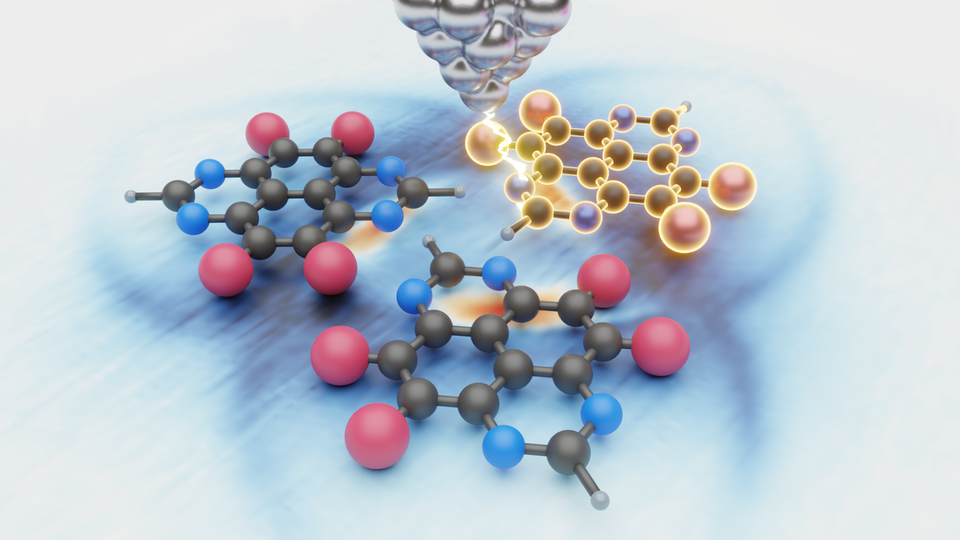
The researchers used a scanning tunneling microscope to arrange molecules into specific clusters. After applying a voltage, they determined the charge distribution at various locations within the cluster. This led to the identification of various charge rings, proving that unpaired electrons are interacting with one another and are present at different locations at the same time.
Writing in Nature Communications, researchers from the University of Basel have published details of how electrons within a cluster of molecules interact with one another and can be controlled. Their findings pave the way for new approaches to the development of quantum components and electronic circuits on the nanometer scale.
Quick Links